
Lobbies and entrance glass
The first fifteen feet of a building sets expectations for everything behind it. Entrance glass, mats, door furniture and floors are scheduled at a higher frequency than general areas for that reason.
Serving Virginia Beach, Virginia & surrounding areas
Mon–Fri 8am–6pm Sat 9am–2pm
Downtown buildings put most of their constraints on getting in rather than on the cleaning itself. Loading access, shared corridors, security desks and parking all shape when a crew can work, so the schedule here is written around the building's own rules.
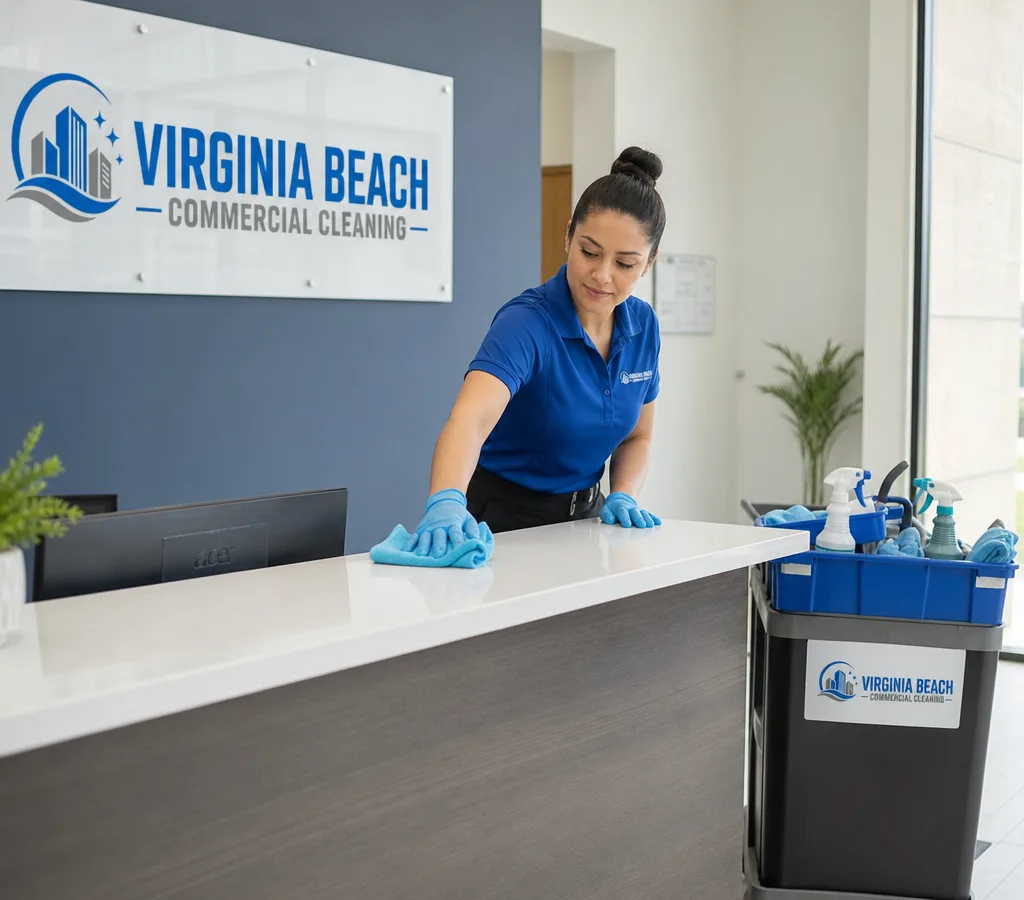
In a multi-tenant building, the cleaning plan has to agree with the building's procedures before it can agree with the tenant's. Freight elevator hours, after-hours security sign-in, loading bay availability and which corridors a cart may cross all narrow the window in which the work can happen. We establish those limits first, then build a scope that fits inside them, because a plan written against an ideal schedule quietly fails in its second week. Single-tenant premises get the same treatment with different variables: street parking for the van, an entrance that is not the customer-facing one, and an alarm sequence that someone has to own. Writing the access arrangement down alongside the task list is what keeps a crew productive from the moment they arrive rather than waiting in a lobby for somebody with a badge.
The areas below are the ones that get defined first in a downtown scope, since they carry the most traffic and are the most visible when standards drop.
The first fifteen feet of a building sets expectations for everything behind it. Entrance glass, mats, door furniture and floors are scheduled at a higher frequency than general areas for that reason.
Desk surfaces, shared tables, chairs and the floor beneath them, worked on a rota. Meeting rooms are treated separately because their use is bursty and their turnaround expectations are tighter.
Shared circulation on each floor, including call panels and handrails as touch points. In multi-tenant buildings the boundary between landlord and tenant responsibility is written into the scope to avoid gaps.
Fixtures, partitions, floors and dispensers on a frequency matched to floor occupancy, with restocking responsibility stated. These are tracked individually rather than rolled into a general line.
Counters, sinks, appliance exteriors, tables and floors. Food areas are sequenced away from restroom work in the order of operations, and that sequence is recorded rather than left to habit.
Exam and consultation rooms, waiting areas and reception, cleaned to a documented order with waste streams kept separate and the process repeatable between crews.
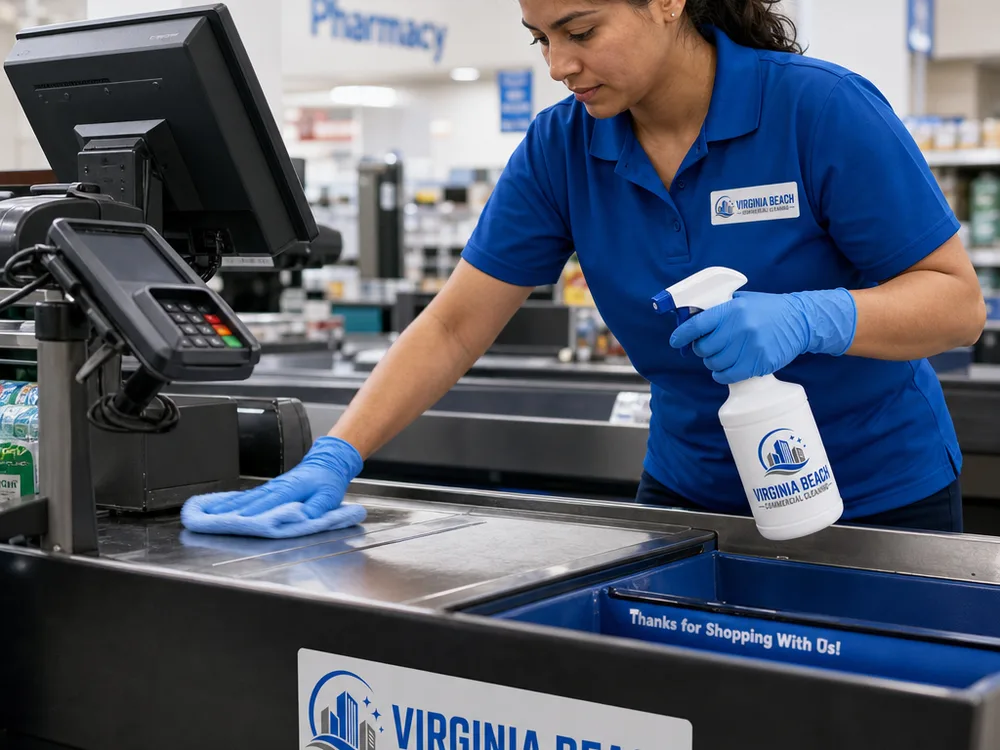
Most downtown clients land on evening service, but it is worth deciding deliberately rather than by default. Early morning suits buildings whose staff leave late and whose security winds down overnight. Evening suits offices that empty predictably and want a clean start the next day. Daytime porter coverage suits high-traffic lobbies and restrooms where the standard cannot hold for twenty-four hours on one visit. Whichever window applies, it gets fixed in the scope along with the access procedure, and it is reviewed once the first month has shown how the building actually behaves. Where a building's own rules change, such as a freight elevator going out of service or security hours shifting, the schedule is renegotiated openly instead of a crew working around it and the scope drifting out of date.
Setting up a downtown contract is mostly about pinning down access and hours accurately, so the first visit is productive rather than exploratory.
Tell us the floor or suite, the building type and whether it is single or multi-tenant. That determines which rules we need to read before anything else gets planned.
We check freight access, after-hours sign-in, permitted routes for equipment and parking for the van. These are the constraints that decide what a visit can realistically include.
A walkthrough establishes square footage, restroom count, floor surfaces and the areas carrying the most traffic, plus anything needing special handling.
Rooms, surfaces, frequencies and the chosen working window go into one document, together with the access steps and who owns keys, codes or badges.
Downtown buildings reveal their patterns quickly. We compare the scope against what the building needed in practice and revise frequencies rather than leaving a document that no longer matches.
The quote follows the schedule and the access conditions, not just the floor area. As a general guide across our service area, commercial cleaning typically runs from about $0.10 to $0.30 per square foot per visit, with many smaller offices landing around $250 to $900 per month depending on frequency. Medical suites, higher-traffic buildings and larger facilities generally sit above that band because of the labor time and the tighter process involved. Downtown premises carry one extra variable worth naming: a restricted access window or a long equipment route adds time to every visit, and that shows up in the quote rather than being absorbed by shortening the work. Exact pricing is confirmed after a walkthrough and a written scope of work.
Questions here tend to concern building procedure, security and how cleaning fits around tenants who keep different hours.
No, it is a normal condition and we plan around it. The sign-in procedure, the contact who authorises it and the permitted hours all go into the scope, so a crew is not negotiating access at the door each visit.
Yes, and it is better to say so up front. A narrow freight window shortens the time available on upper floors, which affects either the visit length or what the visit includes. We quote against the real window, not an ideal one.
That boundary is written into the scope explicitly. It is one of the most common places a gap appears, because both parties assume the other has it, so we name it rather than leave it implied.
Yes. Lobbies, restrooms and high-traffic circulation sometimes cannot hold a standard on one visit a day, and a short daytime attendance is usually a better answer than lengthening the evening visit.
They are documented at setup with a named owner on each side. If a code changes or a badge is reissued, the scope is updated, because an undocumented access change is what strands a crew in a lobby.
Yes, through a documented revision. If staff start leaving later or the building alters its security hours, the working window is renegotiated rather than quietly squeezed.
Yes. Move-ins, move-outs, pre-inspection work and post-event resets are common one-time jobs, and they are quoted the same way: walkthrough first, written scope, then the work.
Send us the suite or floor, the building's access procedure and the hours that work for your staff. We will walk the space, write a scope against the real constraints and set a schedule that holds.
Request a quote
Send the details and we will arrange a walkthrough, then confirm a written scope and cost before anything is scheduled.