
Reception and client areas
Entrance glass, mats, seating, surfaces and the floor beneath them. For a small business this is the most visible area in the building, so it is usually the highest frequency in the scope.
Serving Virginia Beach, Virginia & surrounding areas
Mon–Fri 8am–6pm Sat 9am–2pm
A lot of premises here have been adapted over the years, so the floor changes as you walk through them. Getting the cleaning right is mostly a matter of treating each surface as what it is instead of applying one method throughout.
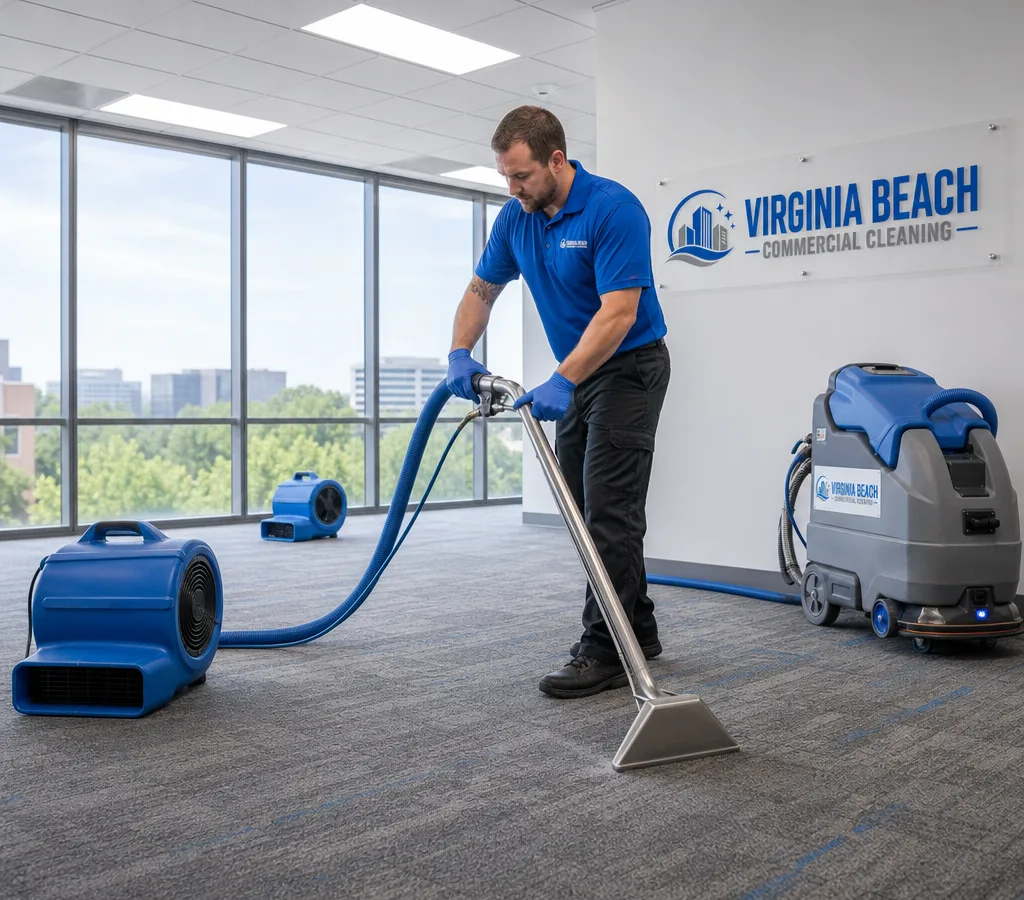
An older building that has been fitted out in stages often carries four or five floor types: original hardwood in one room, sheet vinyl in a corridor, tile in a restroom, carpet tiles over a later extension, and sealed concrete somewhere at the back. Each responds differently to water, pH and abrasion, and a single mop-and-go routine will visibly degrade at least one of them within months. So the scope maps the floor by area and names the method and interval for each, rather than listing floors as one line item. The same applies to fixtures and joinery. Painted timber, laminate and older ceramic all have limits on the products that can be used on them, and recording those limits in the scope protects the building from a well-intentioned crew reaching for whatever is strongest.
Smaller premises need the same disciplines as a large facility, just sized differently. These are the areas that get specified first.
Entrance glass, mats, seating, surfaces and the floor beneath them. For a small business this is the most visible area in the building, so it is usually the highest frequency in the scope.
Desk areas, shared surfaces, touch points and floors on a set-day rota. Rooms used by clients are separated from internal staff space, since their turnaround expectations differ.
Hardwood, vinyl, tile, carpet and sealed concrete each get their own method and interval. The scope states which product is appropriate per area so no surface is cleaned with the wrong thing.
Fixtures, floors, partitions, mirrors and dispensers, with restocking responsibility named. In older premises the tile and grout condition is noted at setup so deterioration is not mistaken for poor cleaning.
Counters, sinks, appliance exteriors and floors, sequenced apart from restroom work. Small staff kitchens get a defined task list rather than being treated as an afterthought.
Halls and shared rooms that change use through the week, cleaned to a turnaround task list keyed to the booking schedule rather than a fixed nightly routine.
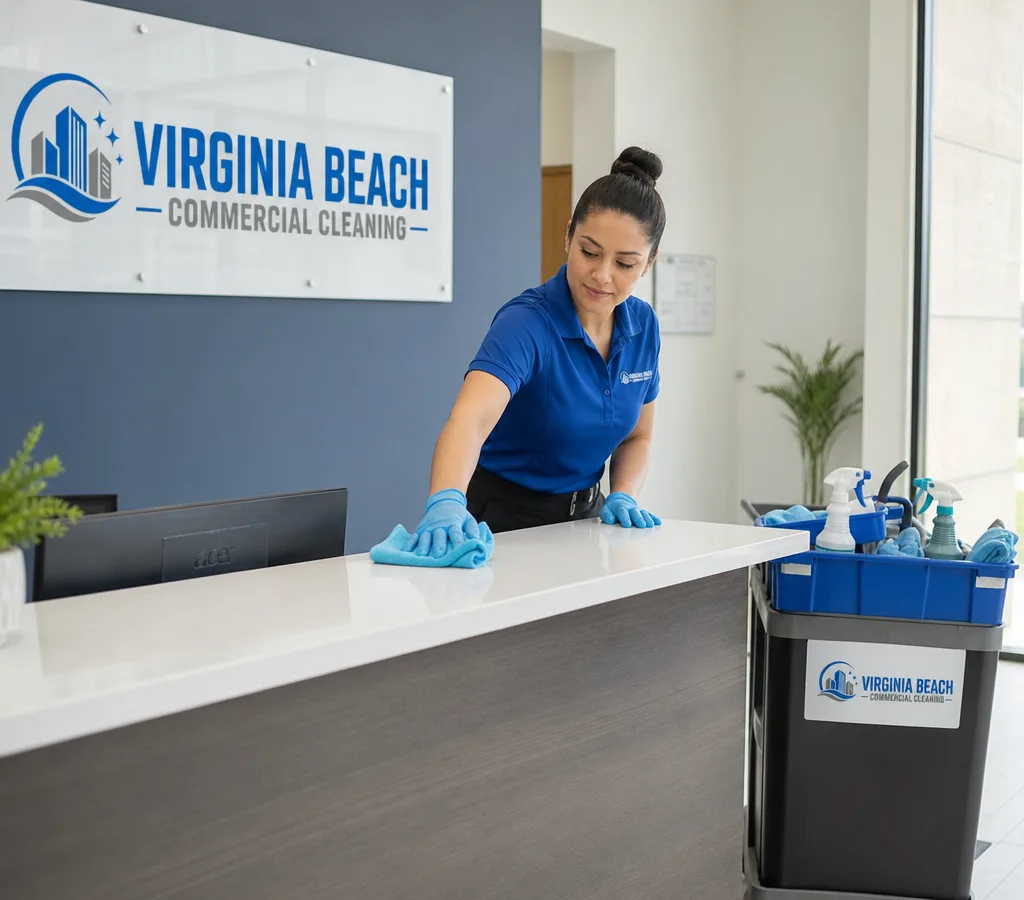
In a building with original fabric, the damage that shows up over a year usually comes from method rather than neglect. Too much water on timber, an aggressive product on older ceramic glaze, or a machine used at the wrong speed on a soft floor each cause harm that cleaning more often will not fix. The scope therefore records what to use and what to avoid per area, and that record travels with the job rather than living in one person's memory. We also note the building's existing condition at setup, including worn patches, cracked grout and stained timber. That matters for two reasons: it sets a realistic expectation of how clean a surface can look, and it means pre-existing wear is not mistaken later for something the cleaning caused. Where a surface is beyond what cleaning can improve, we say so instead of billing repeat attempts.
For an adapted building the walkthrough carries most of the weight, because the floor plan and the surfaces rarely match what a description suggests.
Tell us the building type, roughly how each room is used and which areas see clients. That gives us the frequency questions to ask at the visit.
We walk through and record the floor and fixture types room by room, along with existing wear. This is the step that prevents one method being applied to everything.
Each surface gets an appropriate product and machine, plus its own interval. Restrictions are written down so a different crew member cannot undo them.
Rooms, tasks, frequencies and the working window go into one document, with access arrangements and restocking responsibility named.
Once every periodic task has run once, we check the surfaces and adjust. An interval that is too long shows up as recurring effort; too short shows up as unnecessary cost.
Pricing follows the schedule, the surface mix and the size of the premises. As a guide across our service area, commercial cleaning typically runs about $0.10 to $0.30 per square foot per visit, with many smaller offices landing around $250 to $900 per month depending on how often a crew attends. Buildings with several different floor types need more than one method and more than one interval, which affects labor time more than square footage alone suggests. Medical spaces and higher-traffic buildings generally price above the band. Periodic floor work such as refinishing is quoted separately from the recurring figure, since it runs on its own interval. The figure is settled once the building has been walked and the scope written.
The questions here usually concern older surfaces, what cleaning can realistically achieve, and how a small premises gets a plan that fits.
No, but it does need to be mapped rather than averaged. The scope names the method and interval per area, because one routine applied to hardwood, vinyl and older tile alike will damage at least one of them.
Not always, and we will say so at the walkthrough. We record existing wear at setup so expectations are realistic and pre-existing damage is not later read as a cleaning failure.
Small premises are normal here. The scope is sized to the building, and a lower frequency with a well-defined task list usually serves a small office better than a daily visit it does not need.
Yes. Client-facing rooms are separated from internal space in the scope so they can be turned around at specific times, with the rest handled outside booked hours.
That can be included. At the walkthrough we document what we provide against what you already buy, then write it into the scope rather than leaving it to be sorted out later.
With a turnaround task list keyed to the booking schedule instead of a fixed nightly routine, so the room is reset for its next use rather than cleaned at a time that suits a generic rota.
That is the aim, because a per-surface plan depends on knowing the building. Where a crew member changes, the written method and restriction notes travel with the job so nothing is relearned by trial.
Tell us the premises type, the rooms that need regular attention and any surfaces you are concerned about. We will map the building, set a method per area and put it in a written scope.
Request a quote
Send the details and we will arrange a walkthrough, then confirm a written scope and cost before anything is scheduled.